BUENOS AIRES TETRA
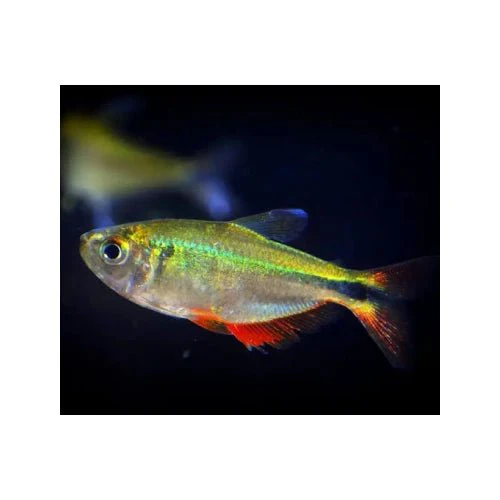
The Buenos Aires Tetra is a robust and active freshwater fish native to the rivers and streams of South America, particularly Argentina, Paraguay, and southeastern Brazil. Recognized for its shimmering silver body adorned with red-tipped fins and a distinctive black diamond-shaped spot near the tail, this species adds dynamic movement and visual appeal to any aquarium. Its hardy nature and adaptability make it an excellent choice for both novice and experienced aquarists.
Features
-
Scientific Name: Hyphessobrycon anisitsi
-
Common Names: Buenos Aires Tetra, Diamond Spot Characin, Red Cross Fish
-
Origin: South America (Argentina, Paraguay, Uruguay, southeastern Brazil)
-
Size: Up to 7.5 cm (3 inches)
-
Lifespan: 5–6 years
-
Temperament: Semi-aggressive; may nip fins of slow-moving or long-finned fish
-
Diet: Omnivorous – accepts flakes, pellets, live, and frozen foods
-
Water Parameters:
-
Temperature: 18–28°C (64–82°F)
-
pH Level: 5.8–8.5
-
Hardness: 2–35 dGH
-
-
Minimum Tank Size: 114 liters (30 gallons)
Why Choose Buenos Aires Tetras?
-
Vibrant Appearance: Their striking coloration and distinctive markings enhance the visual appeal of any aquarium.
-
Active Swimmers: They bring lively movement, making the tank more dynamic.
-
Hardy Nature: Adaptable to various water conditions, suitable for beginners.
-
Community Friendly: When kept in groups, they coexist well with other semi-aggressive or similarly sized species.
Tank Requirements
-
Substrate: Fine gravel or sand to mimic natural habitats.
-
Decor: Incorporate hardy plants Java Fern, Anubias, driftwood, and rocks to provide hiding spots and reduce stress.
-
Filtration: Efficient filtration system to maintain water quality; ensure moderate water flow.
-
Lighting: Moderate lighting to enhance their coloration and support plant growth.
-
Tank Cover: Secure lid recommended, as they may jump if startled.
Compatible Tank Mates
Buenos Aires Tetras are generally peaceful when kept in schools of six or more and can coexist with similarly sized, non-aggressive species. Suitable companions include:
-
Rosy Barbs
-
Congo Tetras
-
Rainbowfish
-
German Blue Rams.
Note: Avoid housing them with long-finned or slow-moving fish to prevent potential fin-nipping.
Feeding Recommendations
-
Staple Diet: High-quality flake or pellet food formulated for tropical fish.
-
Supplementary Foods: Live or frozen foods like brine shrimp, daphnia, and bloodworms.
-
Feeding Frequency: Once or twice daily; offer only as much as they can consume in 2–3 minutes to prevent overfeeding.
FAQs
Are Buenos Aires Tetras suitable for beginners?
Yes, their hardy nature and adaptability make them ideal for novice aquarists.
Can they be kept in planted tanks?
They may nibble on soft plants; it's recommended to use hardy plant species like Java Fern or Anubias.
Do they require a heater?
Yes, maintaining a stable temperature between 18–28°C (64–82°F) is essential for their well-being.
How many should be kept together?
They are schooling fish and should be kept in groups of at least 6 to promote natural behavior and reduce aggression.
Original: $6.37
-65%$6.37
$2.23Product Information
Product Information
Shipping & Returns
Shipping & Returns
Description
The Buenos Aires Tetra is a robust and active freshwater fish native to the rivers and streams of South America, particularly Argentina, Paraguay, and southeastern Brazil. Recognized for its shimmering silver body adorned with red-tipped fins and a distinctive black diamond-shaped spot near the tail, this species adds dynamic movement and visual appeal to any aquarium. Its hardy nature and adaptability make it an excellent choice for both novice and experienced aquarists.
Features
-
Scientific Name: Hyphessobrycon anisitsi
-
Common Names: Buenos Aires Tetra, Diamond Spot Characin, Red Cross Fish
-
Origin: South America (Argentina, Paraguay, Uruguay, southeastern Brazil)
-
Size: Up to 7.5 cm (3 inches)
-
Lifespan: 5–6 years
-
Temperament: Semi-aggressive; may nip fins of slow-moving or long-finned fish
-
Diet: Omnivorous – accepts flakes, pellets, live, and frozen foods
-
Water Parameters:
-
Temperature: 18–28°C (64–82°F)
-
pH Level: 5.8–8.5
-
Hardness: 2–35 dGH
-
-
Minimum Tank Size: 114 liters (30 gallons)
Why Choose Buenos Aires Tetras?
-
Vibrant Appearance: Their striking coloration and distinctive markings enhance the visual appeal of any aquarium.
-
Active Swimmers: They bring lively movement, making the tank more dynamic.
-
Hardy Nature: Adaptable to various water conditions, suitable for beginners.
-
Community Friendly: When kept in groups, they coexist well with other semi-aggressive or similarly sized species.
Tank Requirements
-
Substrate: Fine gravel or sand to mimic natural habitats.
-
Decor: Incorporate hardy plants Java Fern, Anubias, driftwood, and rocks to provide hiding spots and reduce stress.
-
Filtration: Efficient filtration system to maintain water quality; ensure moderate water flow.
-
Lighting: Moderate lighting to enhance their coloration and support plant growth.
-
Tank Cover: Secure lid recommended, as they may jump if startled.
Compatible Tank Mates
Buenos Aires Tetras are generally peaceful when kept in schools of six or more and can coexist with similarly sized, non-aggressive species. Suitable companions include:
-
Rosy Barbs
-
Congo Tetras
-
Rainbowfish
-
German Blue Rams.
Note: Avoid housing them with long-finned or slow-moving fish to prevent potential fin-nipping.
Feeding Recommendations
-
Staple Diet: High-quality flake or pellet food formulated for tropical fish.
-
Supplementary Foods: Live or frozen foods like brine shrimp, daphnia, and bloodworms.
-
Feeding Frequency: Once or twice daily; offer only as much as they can consume in 2–3 minutes to prevent overfeeding.
FAQs
Are Buenos Aires Tetras suitable for beginners?
Yes, their hardy nature and adaptability make them ideal for novice aquarists.
Can they be kept in planted tanks?
They may nibble on soft plants; it's recommended to use hardy plant species like Java Fern or Anubias.
Do they require a heater?
Yes, maintaining a stable temperature between 18–28°C (64–82°F) is essential for their well-being.
How many should be kept together?
They are schooling fish and should be kept in groups of at least 6 to promote natural behavior and reduce aggression.